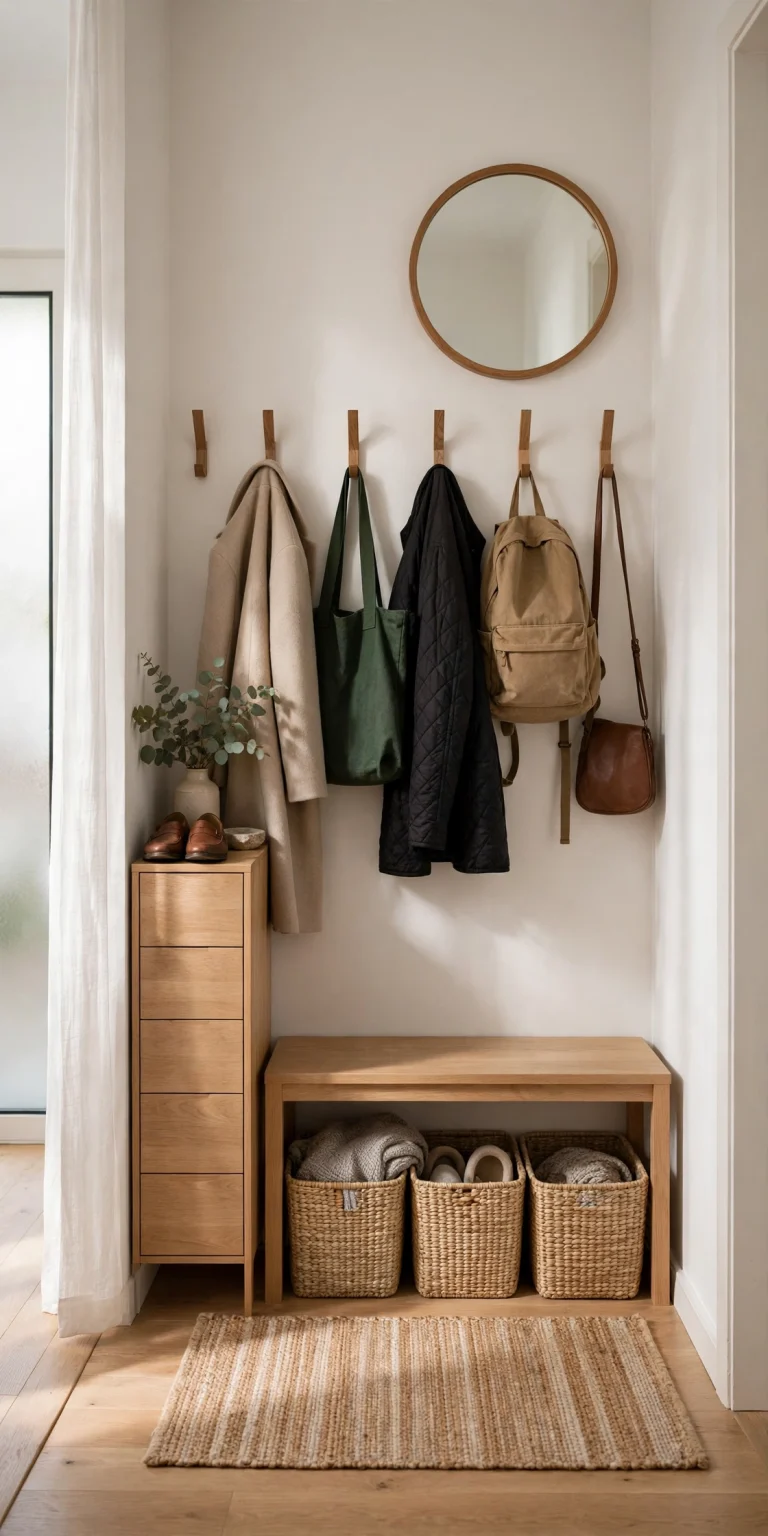
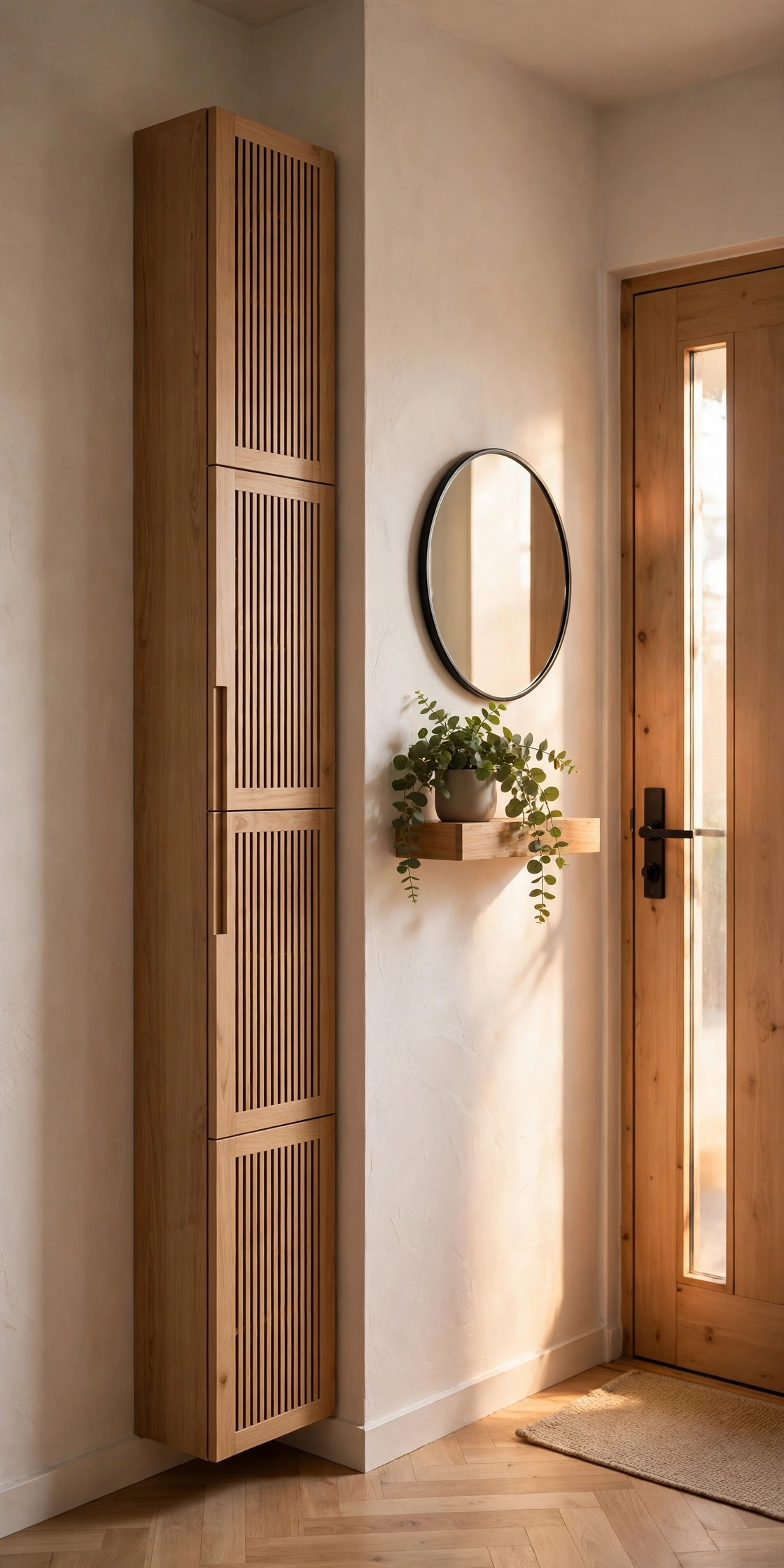
15 Small Entryway Shoe Storage Ideas That Don’t Block the Door
Shoes are the first thing to pile up by the front door — and in a small entryway, that pile quickly blocks the door, narrows the walkway, and becomes a tripping hazard. The trick is storing pairs vertically, under furniture, or flat against a wall away from the door's swing path. Every idea in this list was chosen to keep the doorway and the route into your home completely clear, with options for renters and owners alike. Before you buy anything, open your door fully and mark its swing arc on the floor, then measure the wall space outside that arc. Most households only need daily storage for two to four pairs per person at the door.
1. Slim Tilt-Out Shoe Cabinet Against the Wall
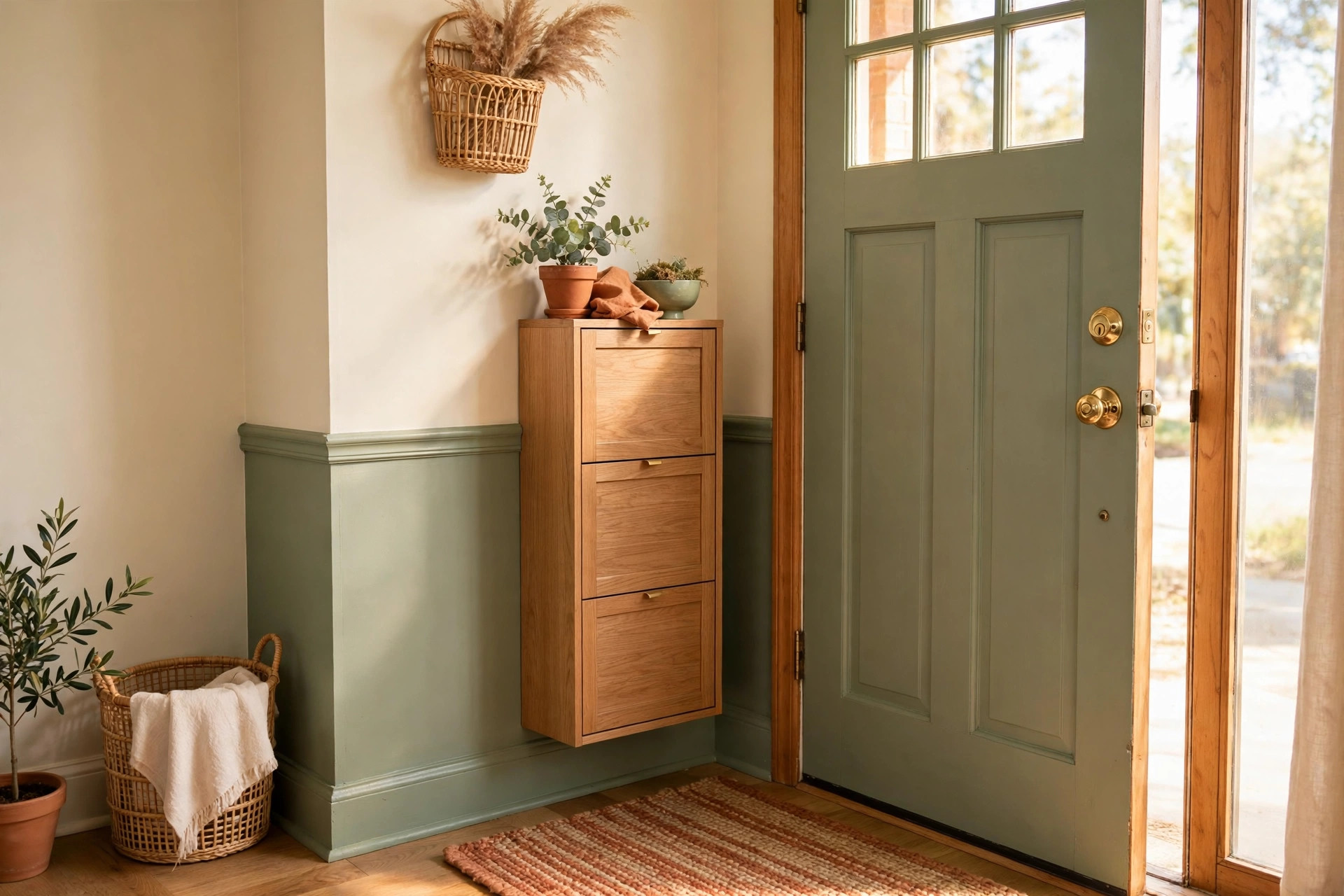
Place a tilt-out shoe cabinet, often under 7 inches deep, flat against a wall outside the door's swing arc. Each drawer tips forward to hold pairs upright, so it stores a lot in very little depth. Measure your widest shoes first, as very chunky boots may not fit.
2. Low Storage Bench With Shoe Cubbies Below
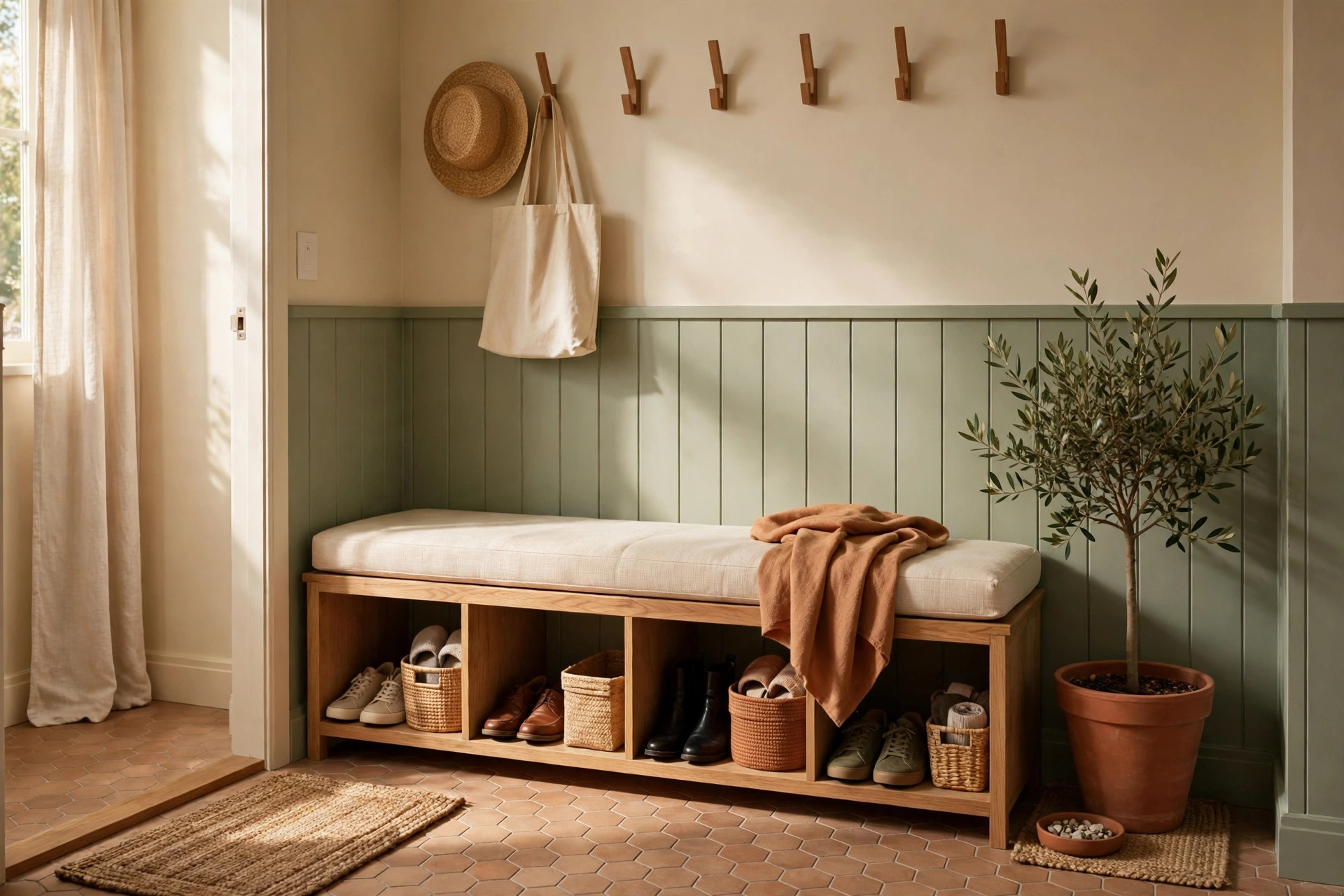
Set a low bench along the wall opposite or beside the door swing, with open cubbies underneath for daily pairs. You get a seat for putting shoes on and storage in the same footprint. Keep the bench fully outside the walkway so the route in stays wide open.
3. Vertical Tower Rack in an Unused Corner
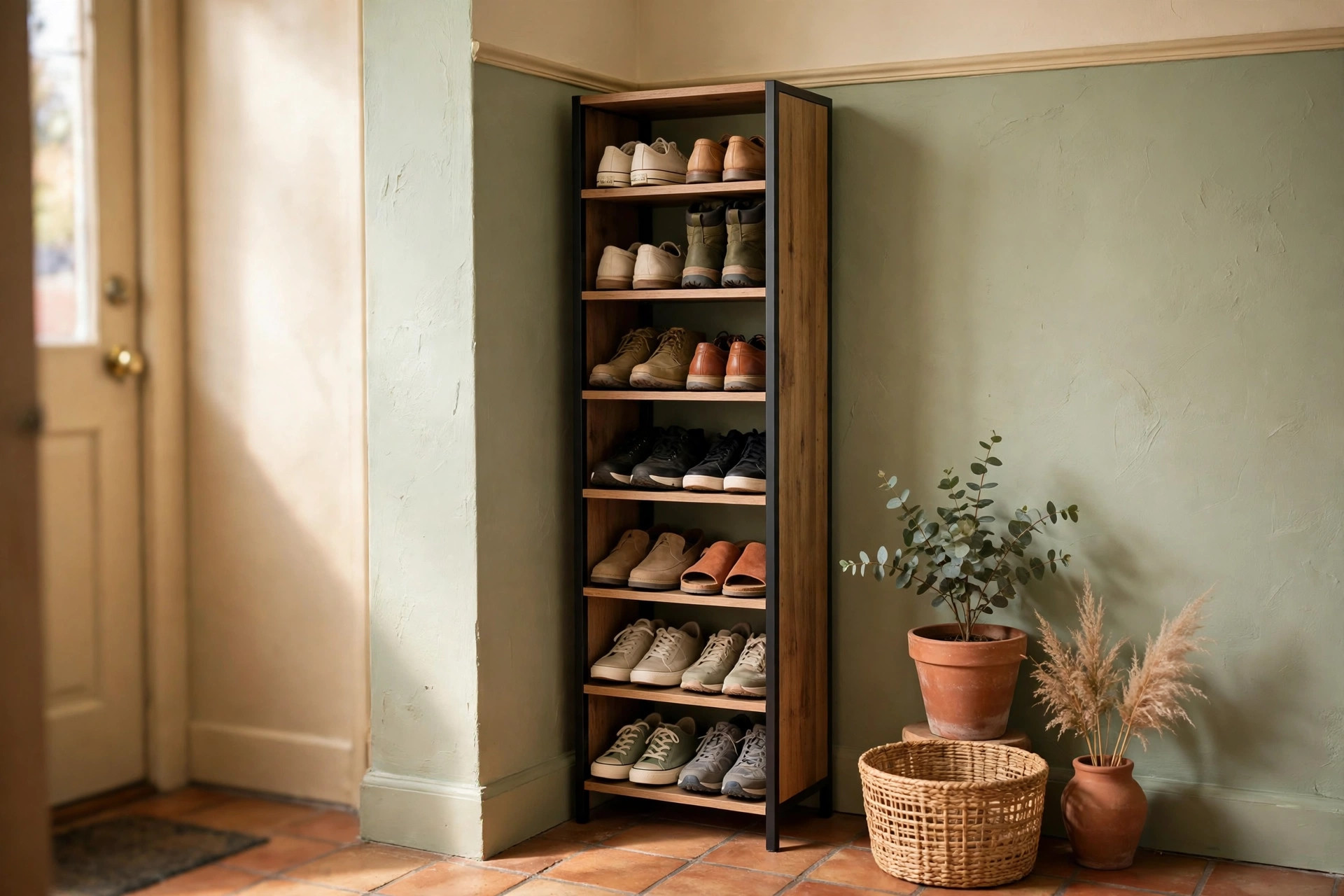
Use a tall, narrow shoe tower in a corner the door never reaches, stacking pairs upward instead of outward. Look for towers with a small square footprint and adjustable shelves for boots. Anchor tall units to the wall for safety if your household allows fixings.
4. Over-the-Door Shoe Organizer on a Closet or Bedroom Door
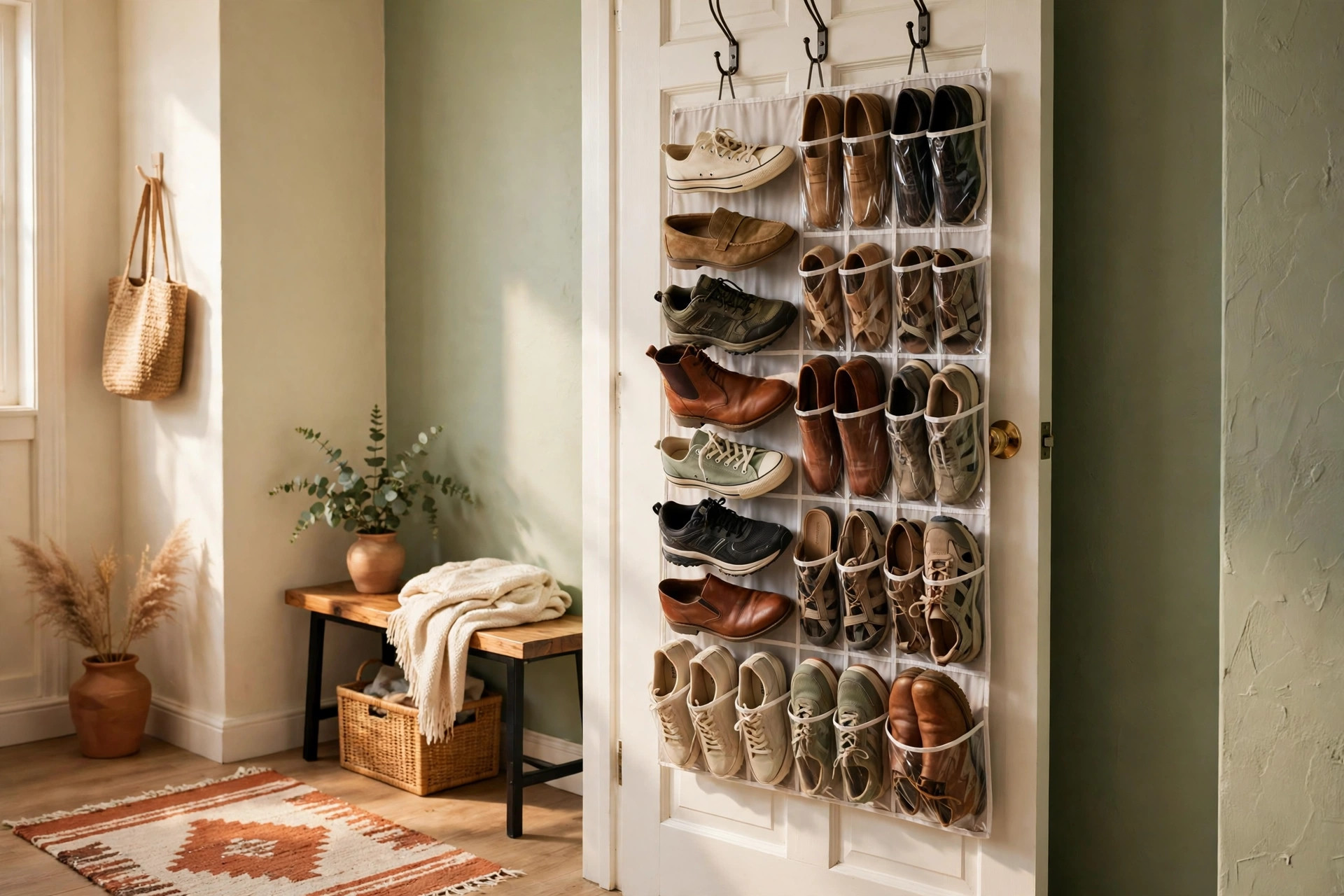
Hang a clear-pocket or rack organizer on the inside of a nearby closet, laundry, or bedroom door — not the front door itself if it would add bulk to its swing. Pockets suit flats, sneakers, and kids' shoes best. Padded hooks protect the door finish and lift off for renters.
5. Under-Bench Rolling Tray for Daily Pairs
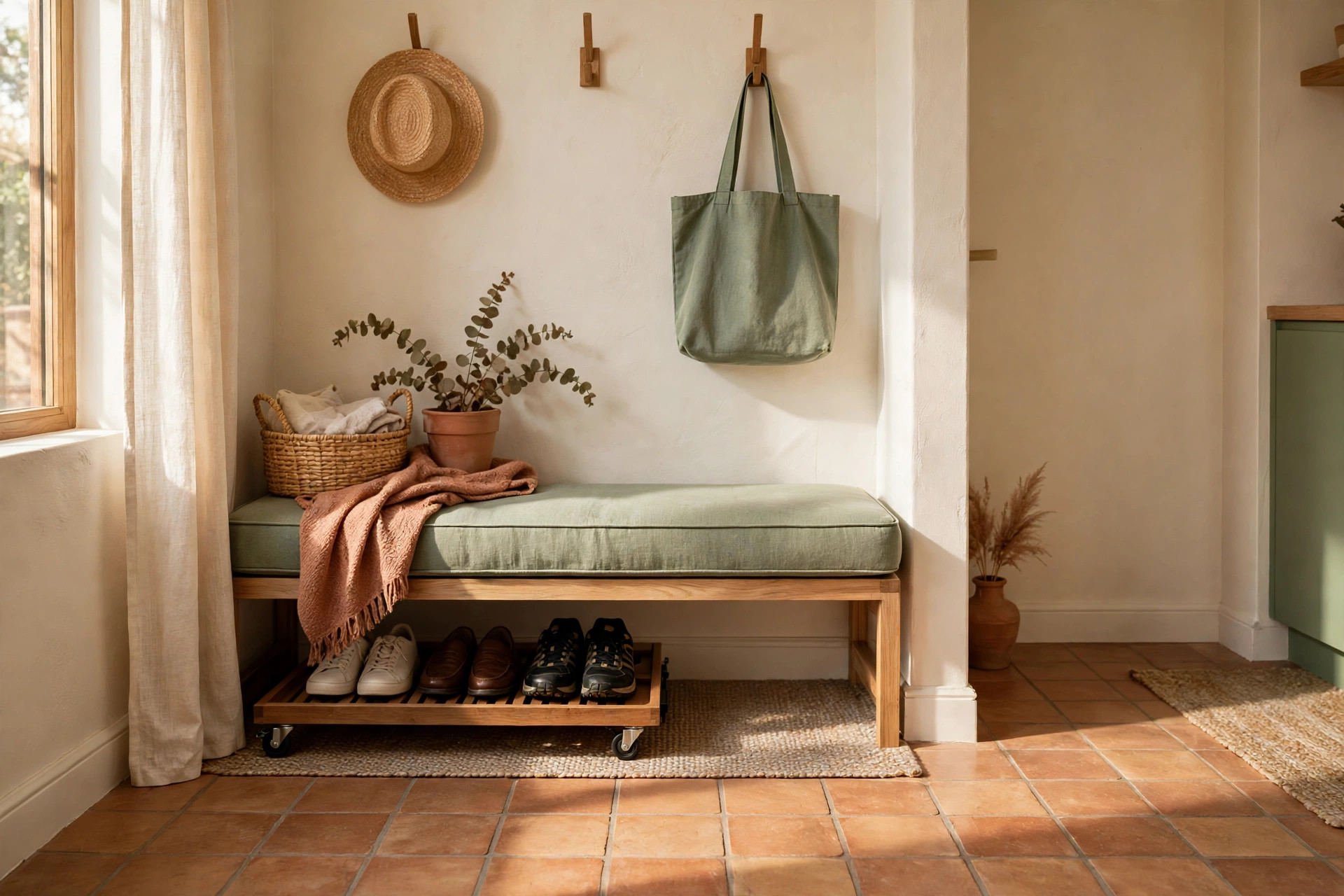
Slide a low rolling tray or shallow crate under your entry bench to hold the pairs you wear most. It pulls out for access and pushes back so nothing sits in the walkway. Choose a tray with a lip to catch dirt and grit from soles.
6. Wall-Mounted Floating Shoe Shelf High or Low
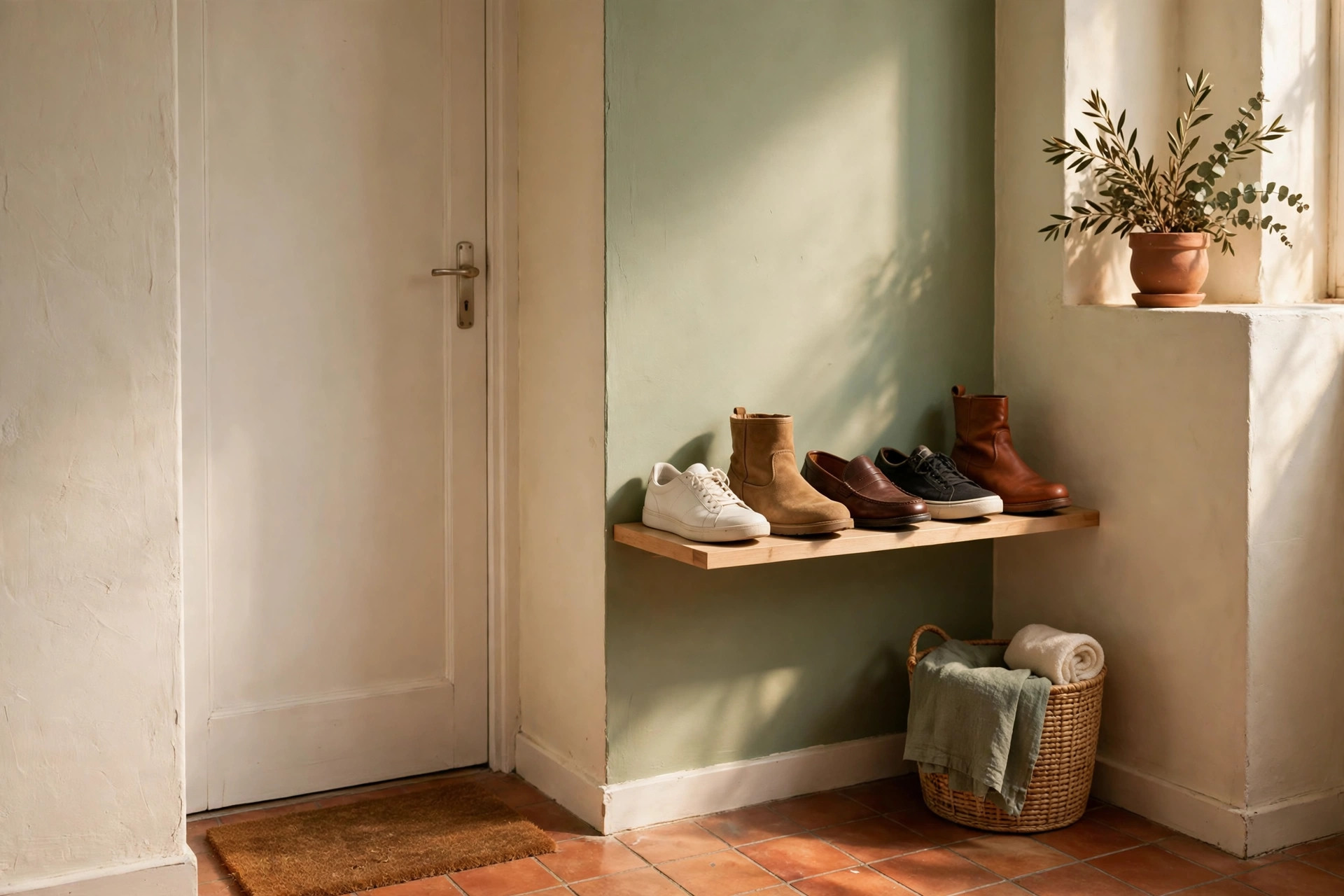
Mount a shallow floating shelf along a side wall, either low for shoes or higher for off-season pairs. Keep it outside the door swing and at a depth that does not narrow the passage. Renters can use a leaning or freestanding shelf in the same spot instead.
7. Stackable Open Crates Stacked Vertically
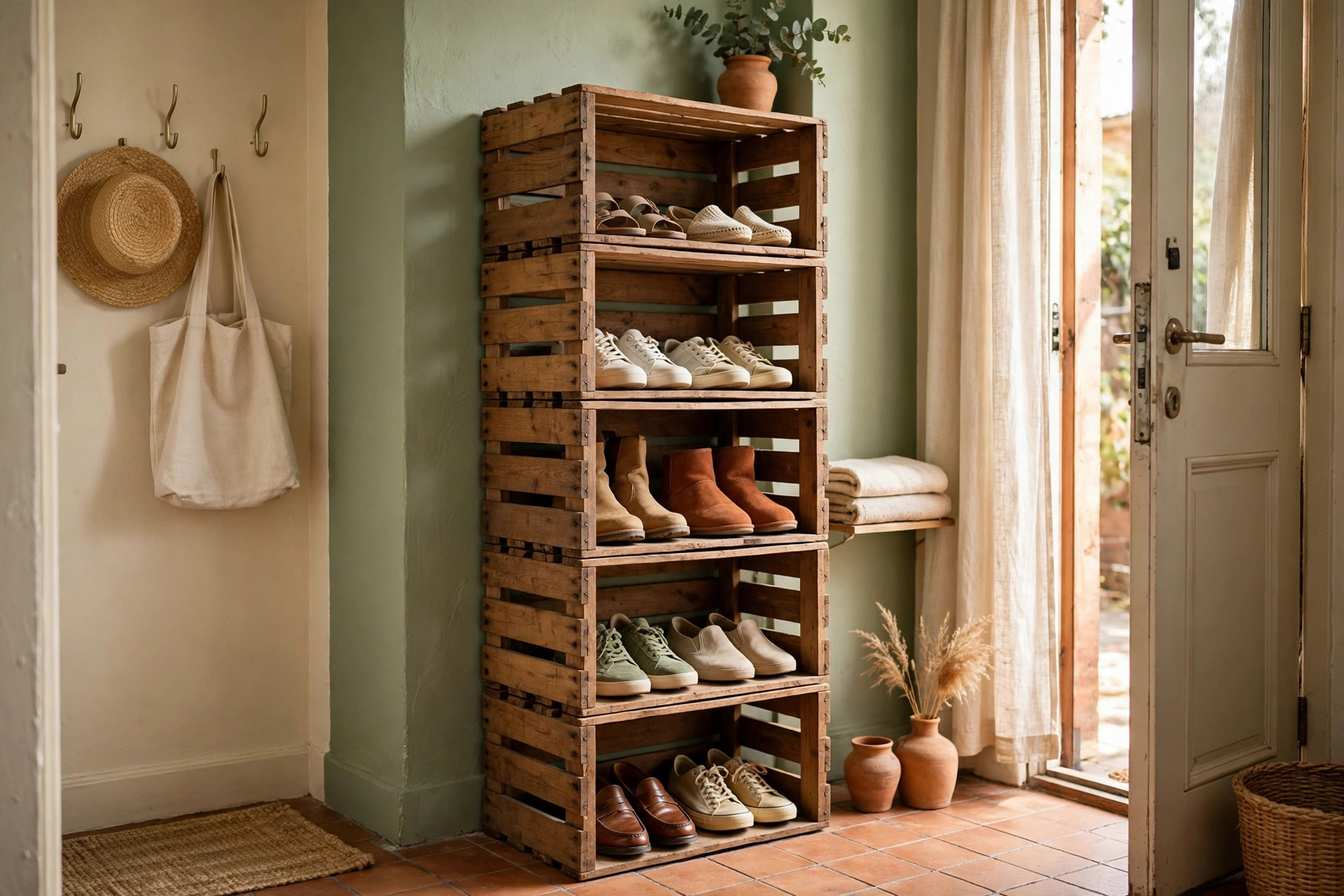
Stack sturdy open crates in a column beside a console or in a corner, one crate per person or shoe type. Stacking uses vertical space while the floor footprint stays to a single crate. Stop at a stable height and keep heavy boots in the bottom crate.
8. Boot Tray With a Raised Rack for Wet Shoes
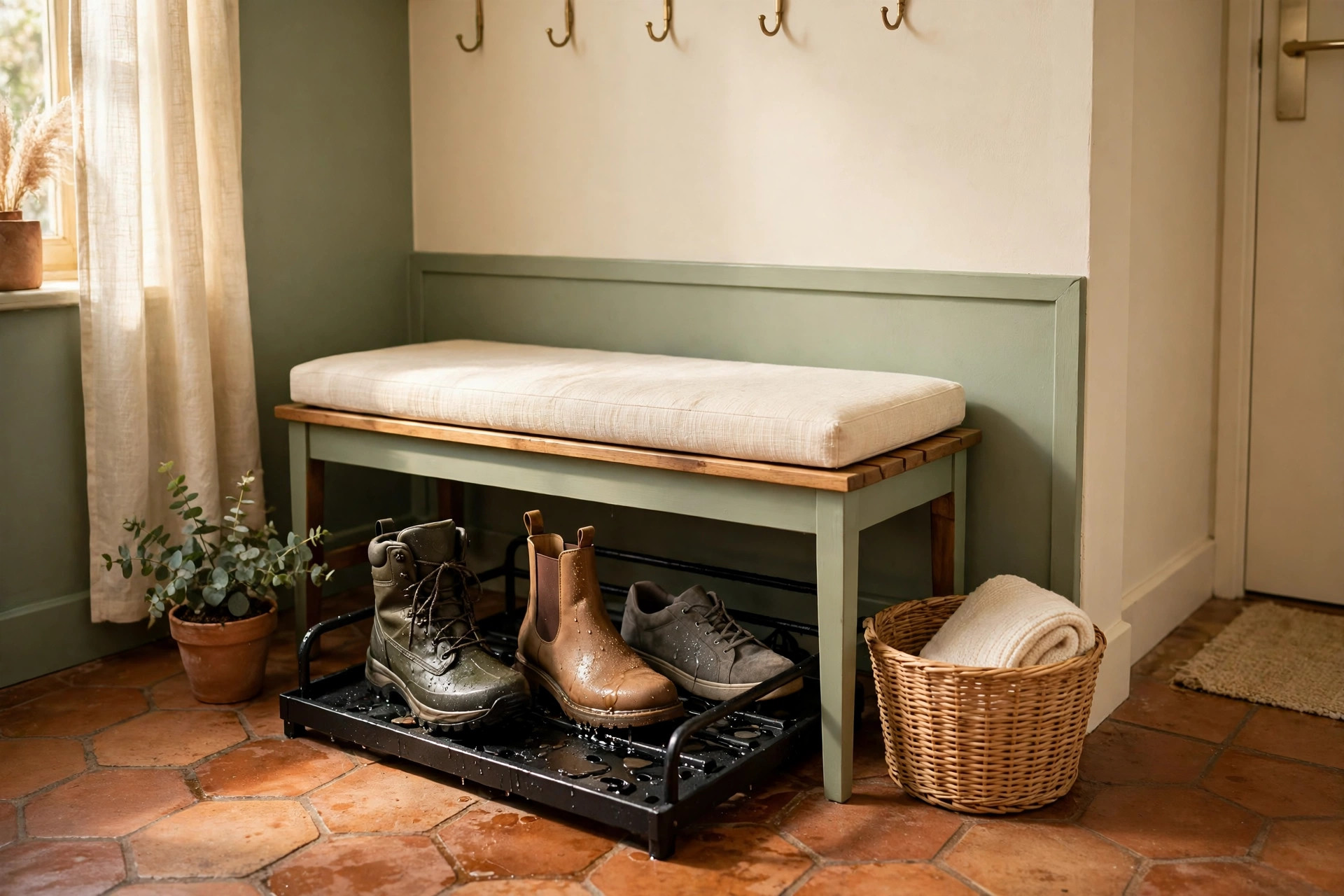
Pair a low-lipped boot tray with a small raised rack so wet shoes drip into the tray instead of pooling on the floor. Place it under a bench or hook rail, well away from the door's path. This keeps the entry safe and dry without spreading shoes across the floor.
9. Slim Rolling Cart Between Wall and Console
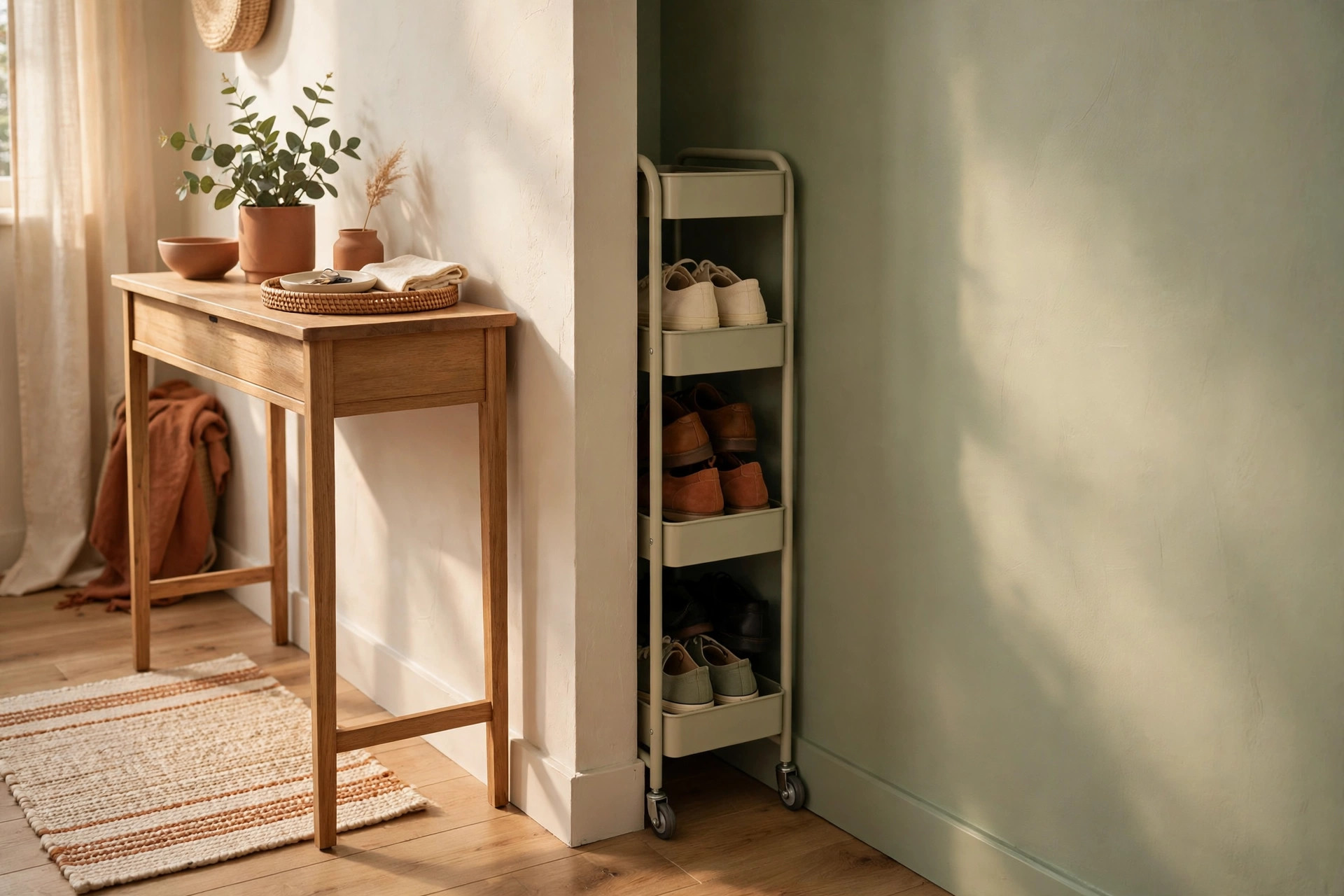
Slide a narrow rolling cart into the gap between a console table and the wall for kids' shoes and slippers. It stays hidden from the walkway and rolls out when you need a pair. Measure the gap first — many slim carts are designed for spaces under 8 inches wide.
10. Hanging Shoe Shelves Inside a Nearby Closet
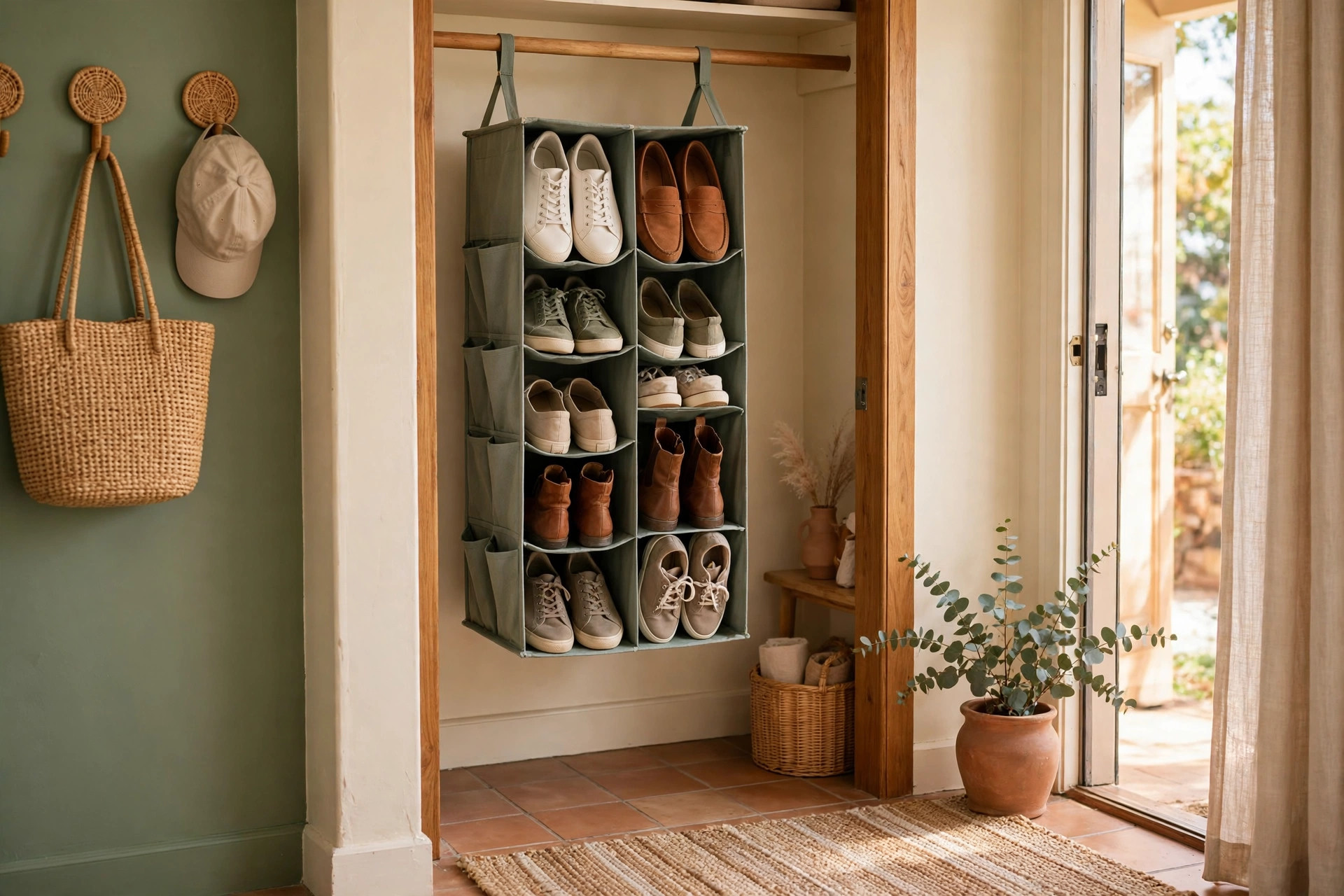
If a hallway or bedroom closet sits a few steps from the door, add hanging fabric shoe shelves inside it for overflow pairs. Keep only one or two daily pairs at the door and the rest here. The entry stays clear and the organizer needs no installation beyond a closet rod.
11. Stair-Step Shelf for a Split-Level or Hallway Edge
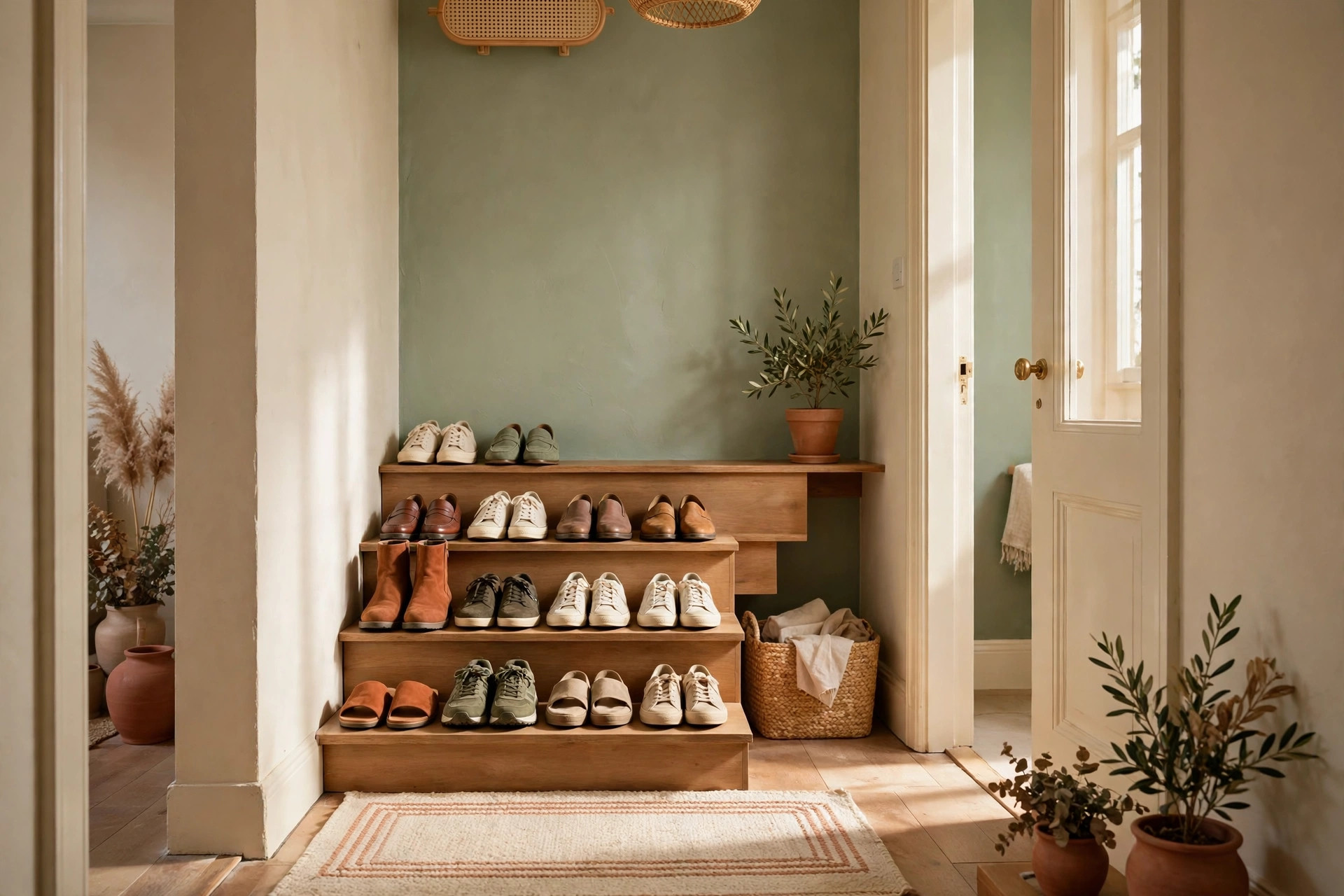
Use a two- or three-step tiered shelf against a side wall so pairs sit on levels without spreading forward. The stepped shape keeps heels and toes visible, so you grab shoes faster. Place the deepest step against the wall to keep the profile as slim as possible.
12. Clear Stackable Shoe Boxes for Off-Season Pairs
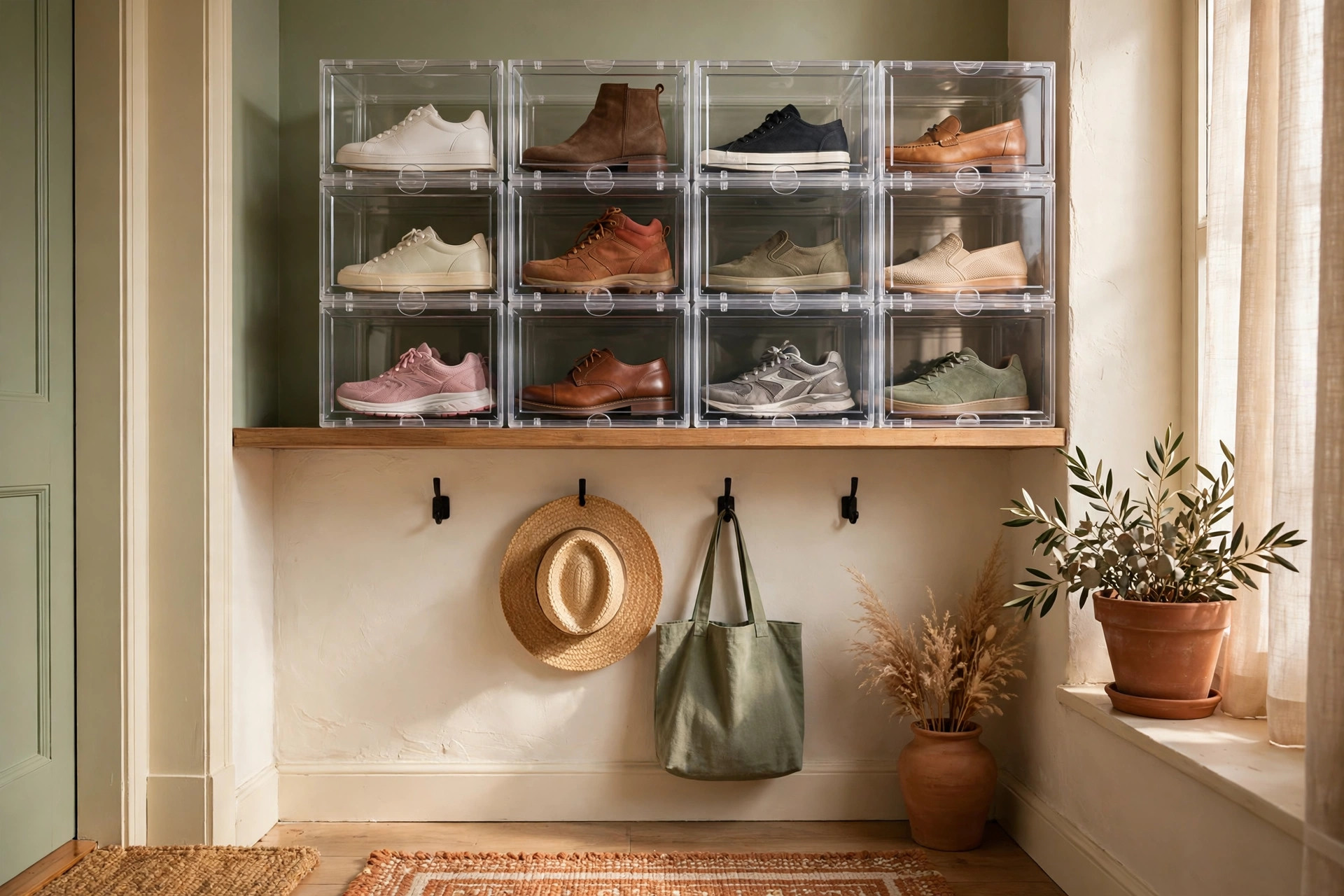
Store off-season shoes in clear, stackable drop-front boxes on a high shelf or in a corner column. Clear sides and front openings mean you can see and reach pairs without unstacking everything. This moves bulk storage up and away from the doorway entirely.
13. Single-Row Shoe Rail Along the Baseboard
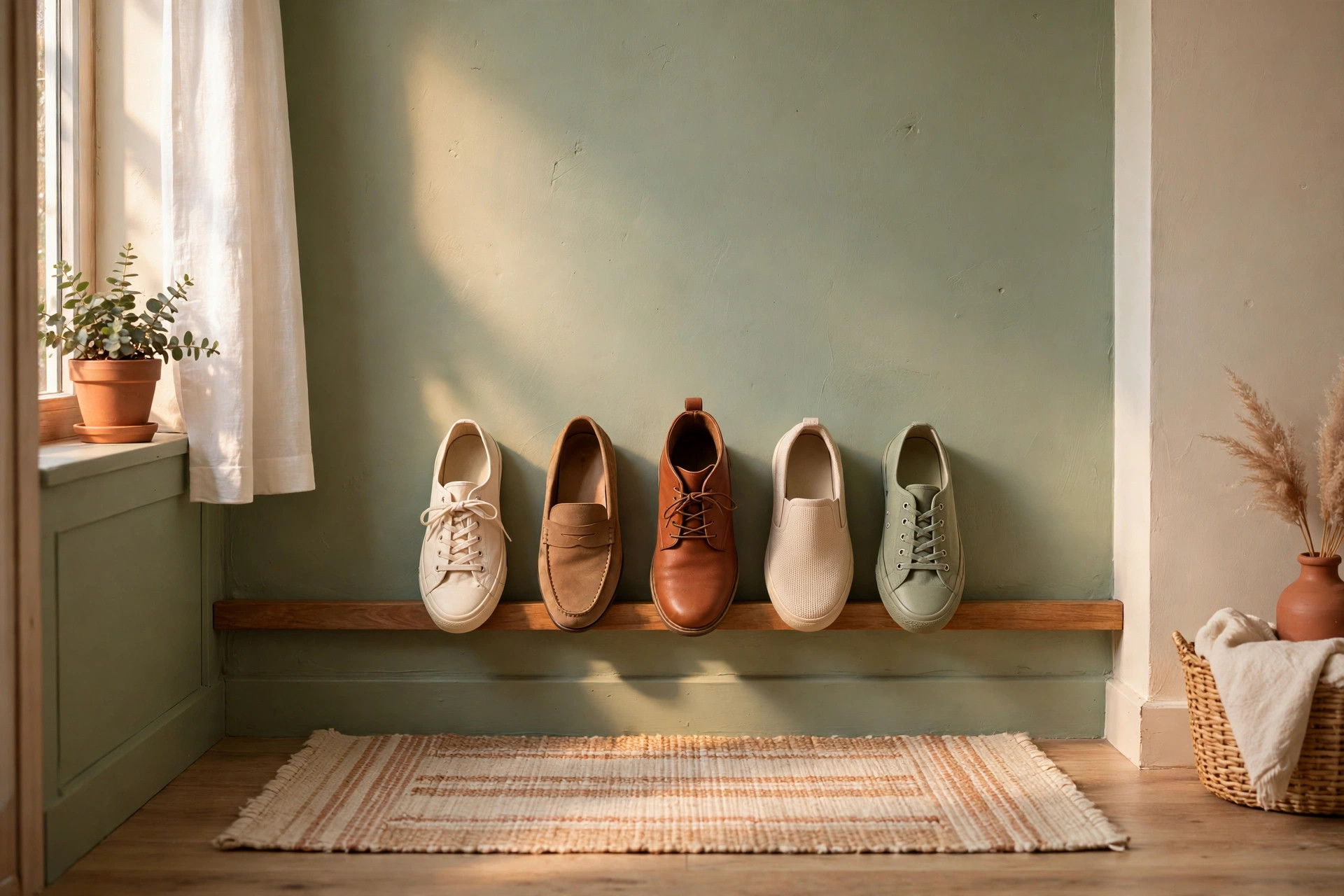
Fit a single-row rail or low bar along a side wall so pairs line up heel-to-wall in one neat row. A single row is the slimmest possible profile and cannot creep into the walkway if you stick to it. It works best as a one-pair-per-person rule for daily shoes.
14. Basket for Slippers and Guest Shoes Only
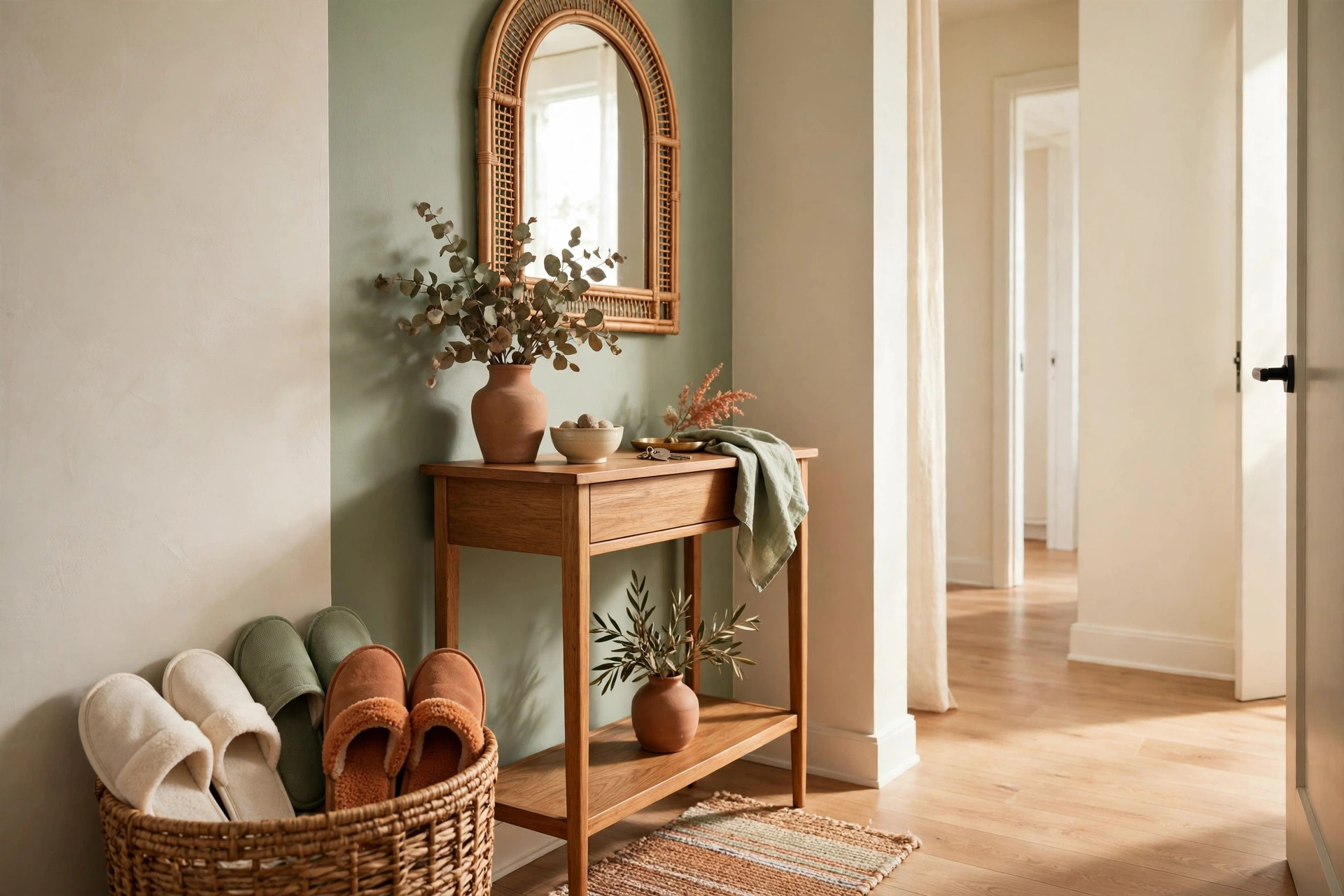
Keep one medium basket beside the console — not in front of the door — for slippers and flip-flops that have no structure. Soft shoes are the worst pile-makers, and a basket contains them in seconds. Everything structured goes on a rack or shelf instead.
15. Rotating Shoe Rack for a Deep Corner
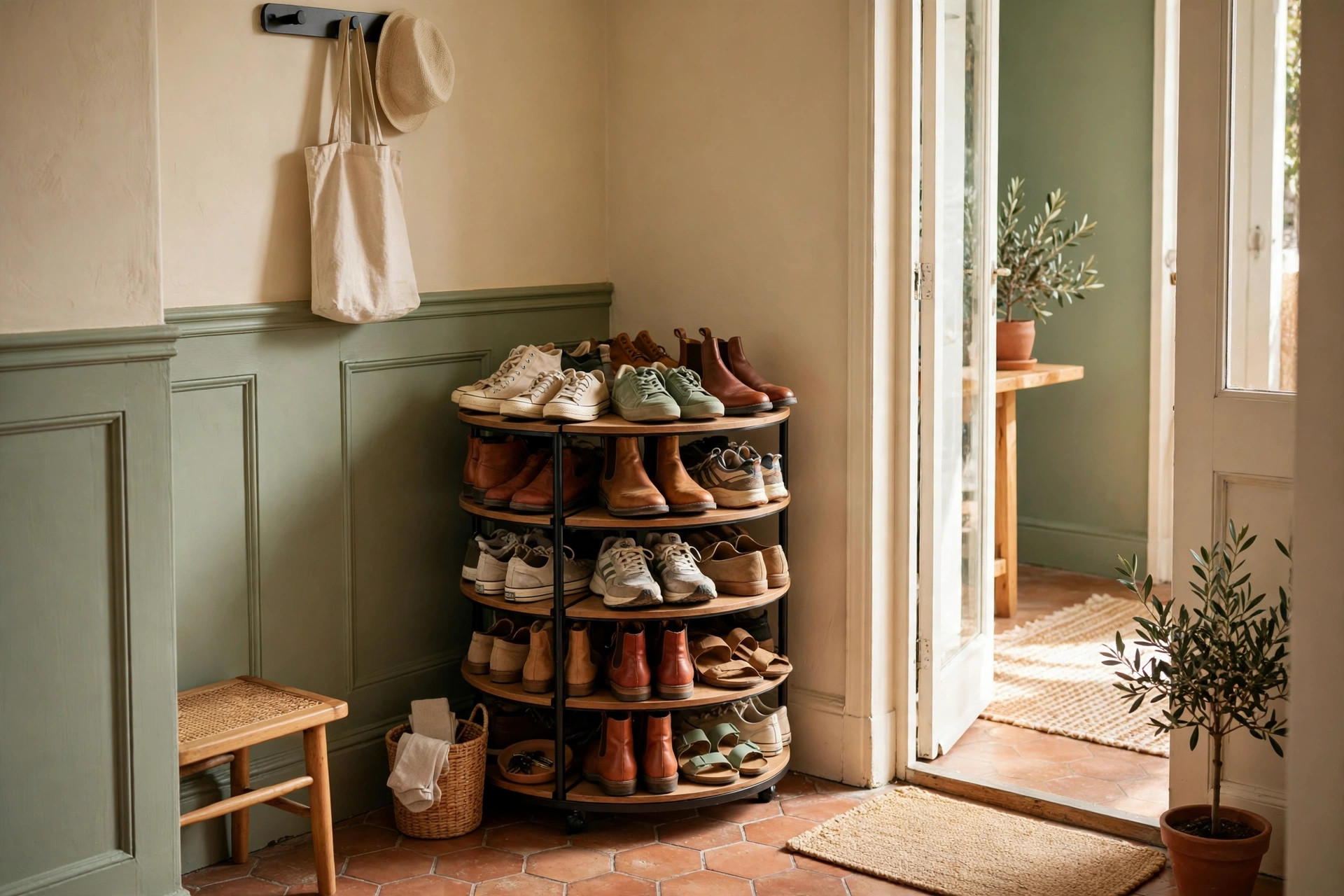
Place a round rotating rack in a deep corner away from the door, where its footprint does not touch the swing or the walkway. Rotation gives access to many pairs in the space a small cabinet would take. Measure the corner's depth and the rack's diameter before ordering.
Frequently Asked Questions
How do I measure the door swing before buying storage?
Open the door fully and note the arc it sweeps across the floor — nothing should sit inside that arc or within the main walking route. Measure the wall runs outside the arc, plus their depth from the wall, before choosing a cabinet or bench. Slim pieces under about 8 to 12 inches deep suit most small entryways.
What is the best option for renters?
Freestanding and over-door options need no fixings: a storage bench, a vertical tower, stackable crates, an under-bench tray, or an organizer on a closet door. All of these keep the door swing clear and leave with you at move-out. Avoid mounting anything until you have checked your lease.
How many pairs should I keep at the door?
Keep only the pairs each person wears most days — usually two to four per person — and move off-season and special-occasion shoes to clear boxes or closet hanging shelves. A single-row rail or small bench enforces the limit naturally. Rotating pairs seasonally stops the entry pile from rebuilding.
Keep Exploring
More small-space ideas to try next: 20 Tiny Entryway Ideas When You Have No Closet and 21 Hidden Storage Ideas — Furniture That Stores Without Showing It.